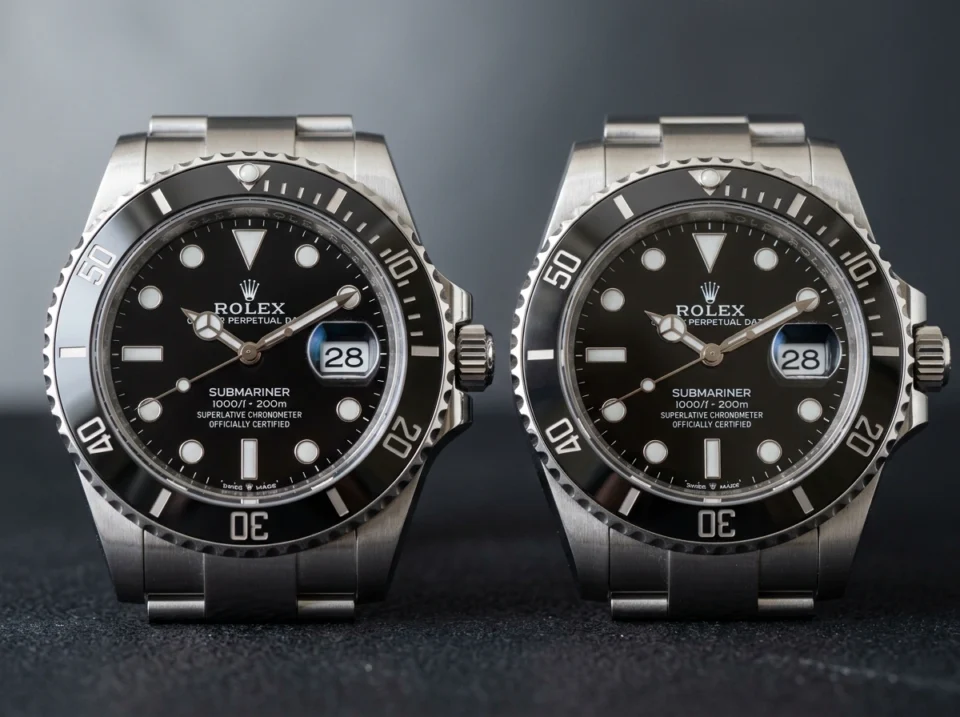
The superclone watch market has grown quickly, and not every product lives up to its claims. Some pieces come close to mirroring the look and feel of a genuine Rolex, while others fall apart under basic inspection. If you are evaluating a watch in this category, knowing what separates a careful build from a careless one can save you money and frustration.
This guide walks through the most common warning signs buyers should watch for. You will learn how to assess weight, movement behavior, dial accuracy, and finishing quality so you can judge a piece on its merits rather than on marketing language. By the end, you will have a practical checklist you can apply before making a decision.
Why Quality Varies So Much
Not all superclones are made to the same standard. Manufacturers differ in their access to tooling, the grade of steel they use, and the movements they install. Two watches advertised with the same name can perform very differently in person.
A bad superclone usually reveals itself in small details: a rattling crown, a misaligned date window, or a dial print that looks slightly blurry. The better-made pieces hold tighter tolerances and pass closer to inspection. The point of this article is to help you tell those two groups apart.
Red Flag 1: Weight That Feels Wrong
A genuine Rolex has a specific heft that comes from solid steel and a dense movement. Many low-quality clones use lighter alloys or hollow components to cut costs.
Watch for these signs:
- The watch feels noticeably light for its size.
- The bracelet feels tinny or flexes too easily.
- The clasp closes without a firm, solid click.
If a piece feels like a toy in the hand, that is one of the clearest early signals of a weak build. Weight alone is not proof of quality, but a hollow feel often points to shortcuts elsewhere.
Red Flag 2: A Movement That Behaves Poorly
The movement is where many low-grade clones reveal themselves. A good build runs smoothly and keeps reasonable time. A poor one stumbles in ways that are easy to spot once you know what to look for.
What to check on the movement
- Second hand motion: On most automatic models, the second hand should sweep smoothly. A jerky or stuttering motion is a warning sign.
- Timekeeping: A movement that loses or gains several minutes a day is a red flag.
- Winding feel: Gritty, loose, or inconsistent winding suggests low-grade internal parts.
- Power reserve: If the watch stops shortly after coming off the wrist, the movement may be unreliable.
Sellers who refuse to name the movement inside the watch should make you cautious. Transparency about the caliber is a good sign that the maker stands behind the build.
Red Flag 3: Dial and Text Errors
The dial is one of the hardest areas to get right, so it is one of the best places to inspect. Genuine Rolex printing is crisp, evenly spaced, and perfectly aligned.
Look closely for:
- Blurry or uneven text under magnification.
- Misaligned date windows that sit off-center in the aperture.
- Crooked or poorly applied hour markers.
- Incorrect fonts or spacing that looks slightly off.
- A date magnifier (Cyclops) that does not magnify properly or sits at the wrong height.
These flaws often appear together. A single small imperfection might be tolerable to some buyers, but a dial with several errors signals a rushed production process.
Red Flag 4: Weak Finishing and Cheap Materials
Finishing is where craftsmanship shows. Genuine watches have clean transitions between brushed and polished surfaces, smooth edges, and no visible tool marks.
Signs of poor finishing include:
- Sharp or rough edges on the case and bracelet.
- Uneven polishing or visible scratches from manufacturing.
- A bezel that turns unevenly or with a gritty feel.
- Crown threads that catch or cross-thread when screwed down.
Materials matter too. A scratch-resistant sapphire crystal is standard on quality pieces, while cheaper builds may use mineral glass that scratches easily. Coatings that wear off quickly are another common shortfall.
Red Flag 5: Vague or Evasive Sellers
Sometimes the biggest warning sign is not the watch itself but the person selling it. A reliable seller can answer specific questions and provide clear photos.
Be cautious when a seller:
- Avoids questions about the movement or materials.
- Uses only stock images instead of real photos of the actual item.
- Pressures you to buy quickly.
- Cannot explain return or replacement terms.
Doing your own research helps. Comparing notes from communities and reputable sources, such as those that discuss the superclone rolex market, gives you a clearer sense of what a fair build should look like and how much it should cost.
Red Flag 6: Inconsistent Details Across the Watch
A well-made piece feels cohesive. A poorly made one often mixes a decent dial with a weak bracelet, or a good case with a noisy movement.
Imagine inspecting a watch where the case looks convincing, but the clasp wobbles and the second hand ticks instead of sweeping. That mismatch tells you the maker focused on appearance and ignored function. Consistency across every component is a strong indicator of overall quality.
A Quick Pre-Purchase Checklist
Before committing to any purchase, run through these points:
- Does the watch feel solid and appropriately heavy?
- Does the second hand move smoothly, and does it keep reasonable time?
- Is the dial text crisp, aligned, and correctly spaced?
- Is the date centered in its window?
- Are the case edges clean and the bezel action smooth?
- Does the crown screw down without catching?
- Can the seller answer specific questions with real photos?
If a watch fails several of these checks, treat it as a clear warning rather than a minor flaw.
Common Concerns Buyers Have
Many people worry that they cannot judge quality without expert tools. The good news is that most red flags are visible to the naked eye or with a simple loupe. You do not need lab equipment to notice a stuttering second hand or a crooked date window.
Another common concern is price. A suspiciously low price often signals a lower-grade build. While a fair price does not guarantee quality, an unusually cheap offer should prompt closer inspection rather than excitement.
Conclusion
Spotting a bad superclone Rolex comes down to careful, methodical inspection. Pay attention to weight, movement behavior, dial accuracy, finishing, and the seller’s transparency. These five areas reveal most of the shortcuts that separate a weak build from a stronger one.
Use the checklist above before you buy, and trust your observations. When several details feel off at once, that pattern is usually telling you something important. A measured, informed approach will help you avoid the worst products and make a decision you feel confident about.
